Masculinizing Chest Surgery
Chest masculinization that removes breast tissue and contours the chest to create a flatter, more masculine shape.

What it is
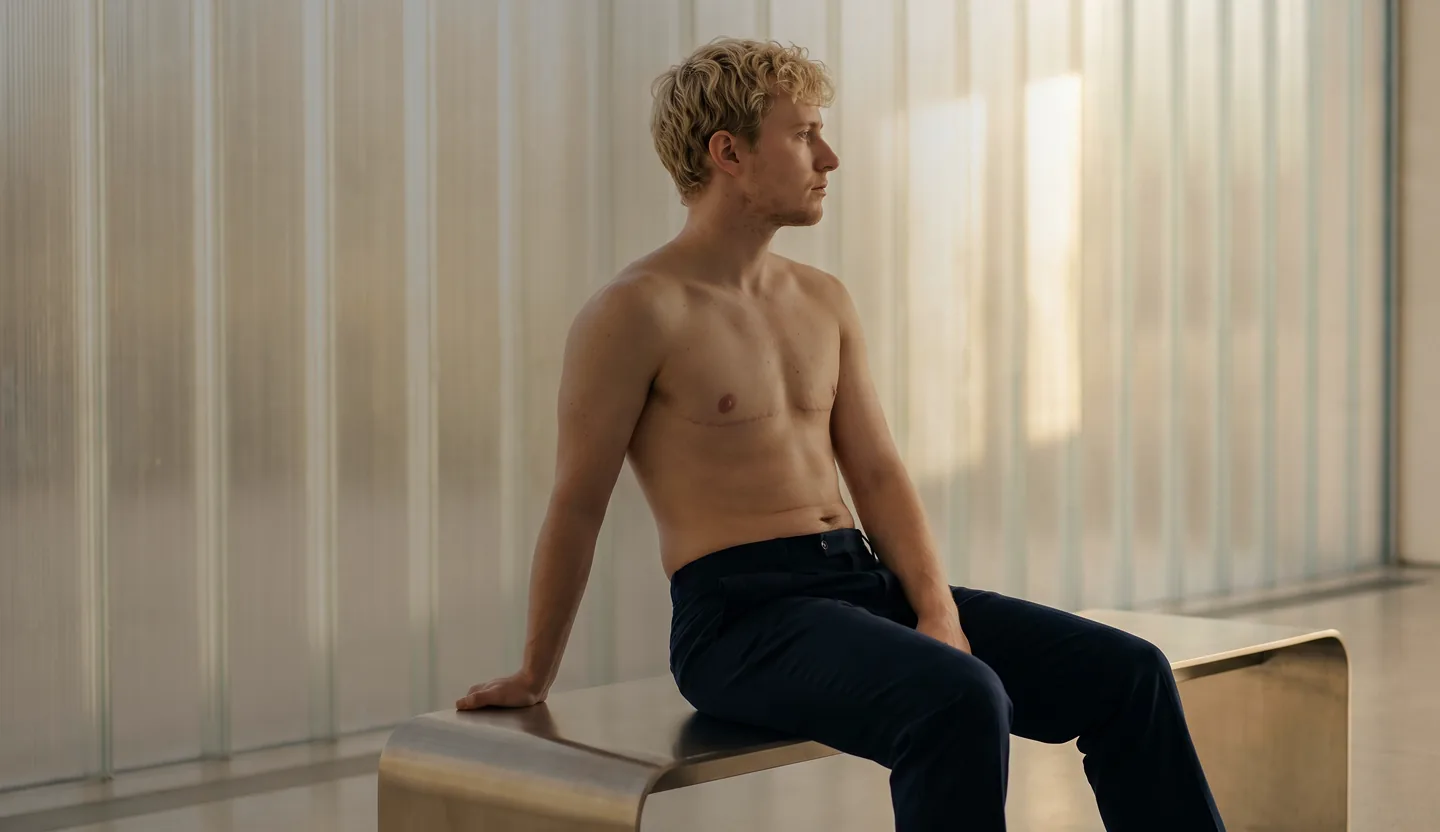
Masculinizing chest surgery, sometimes called top surgery, removes breast tissue and excess skin and reshapes the chest to a flatter, more masculine contour. Where needed, the nipple and areola are resized and repositioned to suit the new chest shape.
The technique is chosen around your anatomy. Smaller chests with good skin elasticity may suit a periareolar or keyhole approach that preserves the nipple on its own blood supply. Larger chests or skin with less elasticity usually suit a double-incision approach, often with free nipple grafting. Dr. Amoroso recommends the method that gives the best contour with the most reliable healing for you.
What it can improve
- A flatter, firmer, more masculine chest contour
- Removal of breast tissue and excess skin
- Nipple and areola size and position to match the chest
- Comfort and confidence in clothing and daily life
It does not change underlying bone structure and cannot guarantee perfect symmetry or scar-free healing. Scars are permanent, though placed and cared for to fade over time.
Quick facts
- Procedure time: 2–4 hours depending on technique
- Anesthesia: General anesthesia
- Clinic stay: Same-day or short stay
- Recovery: Around 2 weeks before light daily activity
- Exercise: Strenuous activity and chest exercise from about 6 weeks
- Final result: Settles over 6–12 months as scars mature
Before the procedure
You will receive individualized instructions covering medication, supplements, smoking, alcohol, and fasting. The approach, nipple position, and realistic outcomes are planned together, and timing within your wider care is discussed. A compression garment is arranged for recovery.
During the procedure
Breast tissue and excess skin are removed and the chest is contoured. Depending on the technique, the nipple and areola are reshaped and repositioned, either preserved on a pedicle or placed as a graft. Drains may be used to reduce fluid collection.
After the procedure
Swelling, bruising, and tightness are normal and settle gradually. A compression garment is worn as advised, light walking is encouraged early, and chest exercise is reintroduced gradually. Scars continue to soften and fade over many months.
Results: what it can and cannot achieve
A flatter, more masculine chest contour is achievable. Surgery cannot guarantee perfect symmetry, cannot remove the need for permanent scars, and cannot change sensation in every case, since nipple sensation may be reduced, particularly after grafting. Your surgeon explains what is realistic for your anatomy.
Possible risks and complications
Chest surgery is generally safe in experienced hands, but all surgery carries risks. Possible risks include:
- Bleeding, infection, or delayed wound healing
- Fluid collection (seroma) or bruising
- Changes in or loss of nipple sensation
- Partial or, rarely, full loss of a nipple graft
- Asymmetry, contour irregularity, or visible scarring
- Need for minor revision in some cases
Smoking and impaired circulation raise the risk of healing problems and wound complications, so honest assessment and smoking cessation are essential.
Who it suits
Masculinizing chest surgery may suit individuals seeking a flatter, more masculine chest. It is especially suitable for those who:
- Wish to remove breast tissue and masculinize the chest
- Are in good general health with realistic expectations
- Have considered timing within their wider care
- Understand that scars are permanent
- Do not smoke or can stop before and after surgery
It may not suit those who are not yet ready to proceed or who have health factors that increase surgical risk. Eligibility and timing are assessed individually and in line with recognized standards of care.
Why Skulpturkliniken
Gender-affirming surgery by Dr. Matteo Amoroso
Gender-affirming surgery at Skulpturkliniken is performed by Dr. Matteo Amoroso, a specialist plastic and reconstructive surgeon experienced in both masculinizing and feminizing procedures (MTF and FTM).
Individually tailored, respectful results
Dr. Amoroso plans every procedure around your anatomy and goals, with respect for the fact that gender-affirming care is deeply personal. The aim is a result that feels like you.
Reconstructive precision meets aesthetic judgment
From the first consultation, Dr. Amoroso helps you understand which technique suits your anatomy, what is realistic, and how the procedure fits into your broader care.
Individualized assessment
Every procedure begins with a thorough, respectful assessment. We evaluate:
- Your anatomy, skin quality, and breast size
- Technique choice based on your goals
- General health and healing factors
- Your broader gender-affirming care plan
- Your goals and realistic expectations
Safety, precision, and long-term care
Safety is central to every step of the surgical journey. Your treatment includes:
- ✓ Specialist consultation with Dr. Matteo Amoroso
- ✓ Detailed assessment and individualized surgical planning
- ✓ Careful evaluation of whether surgery is the right option
- ✓ Preoperative preparation guidance
- ✓ Surgery in a safe and controlled surgical environment
- ✓ Scheduled postoperative follow-up visits
- ✓ Direct access to the surgeon and nursing team
- ✓ Digital medical records through Adoreal®
- ✓ Patient insurance through Folksam
- ✓ Long-term postoperative support
Frequently Asked Questions
What does masculinizing chest surgery involve?
The procedure removes breast tissue and excess skin, and reshapes the nipple and areola for a flat, masculine-contoured chest.
How is the right technique chosen for me?
Technique is chosen based on skin quality and tissue amount, with different incision options for preserved sensation and minimized scarring.
How long is recovery?
Most patients return to desk work after about 1--2 weeks, with full return to exercise after 6 weeks.
Is sensation in the chest or nipple affected?
Sensation can be affected, particularly around the nipple, which is discussed thoroughly at consultation based on the chosen technique.
Trust The Adoreal Experience
The Adoreal Platform gives you complete control of your aesthetic journey. You will be guided throughout your entire process, from consultation to recovery, ensuring an exceptional experience for each of our patients.

You are in Control
Complete access to your information, health records and previous journeys.
Unmatched Predictability
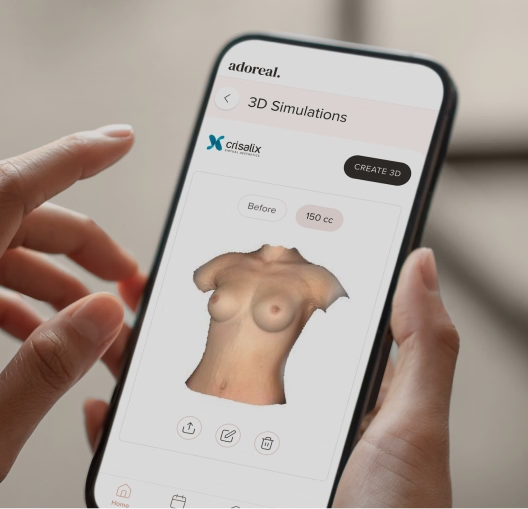
Manage your expectations with our questionnare Silhouette, and visualise your ideal outcomes with 3D simulation.

Trusted step-by-step guide
From bookings to payments, logistics and after care, Adoreal will be your companion.

Enhanced Safety Measures
Complimentary health check, conscious monitoring, and meticulous preparation.
Start your Journey
We will respond promptly. Your message is confidential.